Dellyma: A Delicate Handwritten Font for Elegant Branding Projects
Dellyma in a Real Branding Project: First Impressions on a Café Rebrand
I recently worked on a visual refresh for a local artisanal café looking to refine its brand identity. The brief called for a warm, inviting, and slightly whimsical aesthetic. When I opened my brand board in Adobe Illustrator, I was searching for a script handwritten font that could carry the brand name with grace. I tried a few popular options, but none felt quite right—until I dropped in Dellyma.
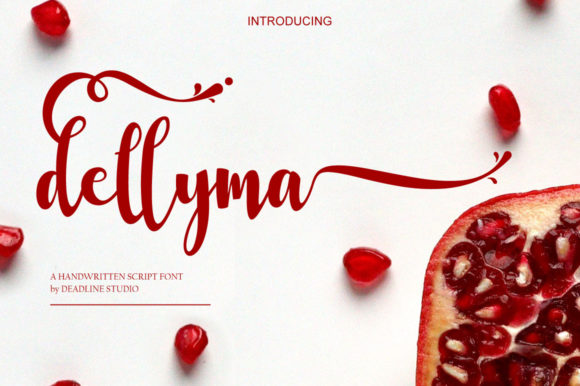
Dellyma is a delicate, elegant and flowing handwritten font. It has beautiful and well balanced characters and as a result, it matches a wide pool of designs. This font is PUA encoded which means you can access all its glyphs and special characters without needing advanced design software. That’s a huge plus for designers who work across platforms or collaborate with non-designers.
Placing Dellyma as the main logotype immediately softened the brand’s visual language. The café’s new name was short and sweet—just two words—but Dellyma gave it a sense of movement and personality. It felt handwritten without looking rushed or informal. It struck the perfect balance between casual and curated.
Dellyma for Logo Design and Brand Identity Systems
Logos demand legibility, uniqueness, and scalability. Dellyma works best as a headline font or logo typeface rather than for long body copy. Its script style is best suited for short, impactful phrases—perfect for brand names, taglines, or featured headlines on a website or packaging.
When I tested Dellyma across different logo variations—stacked, inline, with icons—it held up beautifully. The font’s natural flow and organic rhythm gave the brand a handmade feel without sacrificing professionalism. It’s ideal for creative studios, lifestyle brands, wellness businesses, and boutique shops where a personal touch matters.
One thing I noticed was how well Dellyma maintained its elegance at different sizes. At 36pt on a business card mockup, it looked refined. At 100pt on a shop sign concept, it retained clarity and charm. However, I wouldn’t recommend it for small print applications like ingredient labels or footnotes—it’s not built for micro-text legibility.
Dellyma for Packaging Design and Product Branding
The café project included a full line of retail products—coffee bags, honey jars, and tea tins. I used Dellyma across all packaging mockups as the primary label font. It worked exceptionally well for product names and flavor descriptions.
Dellyma is a script handwritten font that adds a personal, artisanal quality to packaging design. Whether I was placing it over a kraft paper mockup or a minimalist glass label, the font brought warmth and approachability. It helped the products feel handcrafted, even though they were mass-produced.
What stood out was how well it paired with a clean sans serif font like Montserrat or Lato. Using Dellyma for the product name and a modern sans for the description created a strong visual hierarchy. The contrast between the flowing script and structured sans serif gave the packaging a balanced, modern-retro feel.
Dellyma for Web and Social Media Design
I also tested Dellyma in digital spaces—website headers, hero sections, and Instagram story templates. As a webfont, it loaded quickly and rendered cleanly on both desktop and mobile devices. However, I found that using it for long headings or mobile navigation wasn’t ideal. Its delicate strokes can blur slightly on low-resolution screens.
For social media graphics, though, Dellyma shined. I used it for quote overlays, event titles, and post headers. It added a soft, elegant contrast to bold imagery and vibrant color palettes. On a wellness brand’s Instagram feed, for example, Dellyma gave a sense of calm sophistication that aligned perfectly with the brand’s tone.
Font Pairing and Design Versatility with Dellyma
Dellyma is a fonts choice that works best when paired with a more structured typeface. I found the best results when combining it with serif fonts like Playfair Display or serif-based editorial systems. For a more modern look, pairing it with a geometric sans serif like Futura or Avenir created a stylish contrast.
It’s also worth noting that Dellyma supports a variety of languages and includes multiple stylistic alternates. This is especially helpful for designers working with international clients or multilingual branding. The PUA encoding ensures that all these characters are accessible, even in design tools like Canva or Figma.
When Not to Use Dellyma
While Dellyma is a versatile script handwritten font, it’s not a one-size-fits-all solution. It’s not ideal for:
- Body copy or long-form text
- Technical or corporate branding
- Small-sized print applications
- Projects needing high contrast or bold presence
If you're designing a financial report or a tech startup pitch deck, Dellyma may feel out of place. It shines in creative, lifestyle, and artisanal spaces—where warmth and personality are key.
Final Thoughts: Should You Buy Dellyma?
As a brand designer, I look for fonts that are not only visually appealing but also functional across a variety of touchpoints. Dellyma checks both boxes. It brings a delicate elegance to branding that’s hard to replicate with more rigid typefaces. Whether you're working on a bakery packaging concept, a wedding invitation suite, or a boutique brand identity, Dellyma is a font worth considering.
Before using it in final client work, always check the font’s licensing terms—especially if you're creating templates, merchandise, or digital products. Dellyma is a premium font that deserves proper attribution and licensing.
If you're looking for a flowing handwritten font that adds a personal, refined touch to your design work, give Dellyma a try. It’s a quiet standout in the world of script fonts—soft, sophisticated, and surprisingly versatile.